|
Home > Guides > Herbs > Sesame |
|
How to Grow Sesame | Guide to Growing Sesame |
|
|
| |
 |
|
Overview |
|
|
|
|
|
| |
|
| |
Well known in many traditional cuisines across Europe and Asia, Sesame is today popular across the globe. From bagels to sushi, these tiny seeds add a richness and texture that simply cannot be duplicated. Pressed oil of sesame, a mainstay in many Asian cuisines, is rapidly becoming more common in the United States thanks to its unique nutty flavor.
Growing herbs is easy and fun! Buy heirloom herb seeds here and start today! See our complete herb growing guide here. Did you know that many herbs can be sprouted or grown as micro-greens for high-nutrient super-foods? Try our sprouts packs here with the 3-Day Independence Sprouts Pack. Getting cabin fever? Can't wait to get to that Spring gardening? Grow indoors right now with the Complete Micro Greens Growing Kit or the Micro Greens Seed Pack. Have a high nutrient vegetable garden on your windowsill this week! Want to grow culinary and medicinal herbs? Click those links to buy seeds and this link to learn to grow them! It’s that simple. Have you ever thought about growing your own tea garden? How about your own home-grown, tax-free tobacco? Heirloom Organics makes gardening easy. |
|
| |
|
|
| |
Growing Guide
GROWING NOTES
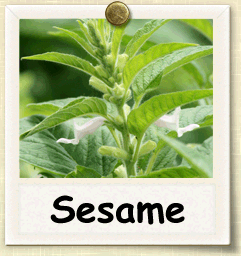
Sesame will grow to a height of approximately 3', with narrow dark leaves and tubular flowers which can be white, pink, lavender or light blue.
Sesame prefers full sun and well-drained soil.
Do not transplant outdoors until the last frost has passed and has reached an average temperature of 60 degrees F or higher.
MAINTAINING
Sesame is best started indoors 4 weeks prior to the last frost of spring. Seeds should be sown in a lightweight potting medium, approximately 1/4" or less beneath the surface of the soil. Keep moist.
|
|
| |
|
| |
|
|
| |
|
|
| |
Harvesting Guide
HARVESTING
Seeds can be collected once most of the seed pods have turned green. Collect pods and placed into a paper sack to dry. Once completely dry, gently break up seed pods to release seeds. Winnow over a fan to separate seeds from chaff.
SAVING SEEDS
Collect the seeds for saving in the same manner as for harvesting. Store in a sealed container in a dry, cool location out of direct sunlight for optimum life.
|
|
| |
|
|
|
| |
|
|