|
Home > Guides > Herbs > Feverfew |
|
How to Grow Feverfew | Guide to Growing Feverfew |
|
|
|
|
| |
 |
|
Overview |
|
|
|
|
|
| |
|
| |
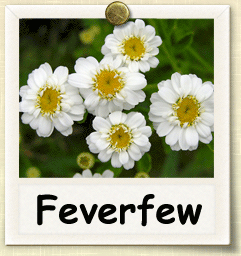
Feverfew was first introduced to North America by European settlers in the 17th century, and has long been used to treat headaches and inflammation. Especially renowned as a treatment for migraines, Feverfew has also been used for menstrual problems such as cramping and irregularity. It can also be taken for problems such as joint pain and rheumatism. |
|
| |
|
|
| |
|
|
| |
|
|
|
|
|
|
|
|
|
Moderately rich, well-drained soil |
|
|
|
|
|
|
|
|
|
|
|
|
Growing Guide
GROWING NOTES
Feverfew often grows to a height of 24-36" and produces good quantities of cheerful yellow and white flowers from early summer through late fall.
Feverfew is hardy and can do well with a wide range of soil and light conditions.
Feverfew is best started in late summer or early fall. The small seeds are light dependant and should be lightly covered with a very thin layer of soil (approx ¼" deep), 3 or 4 seeds together.
If starting indoors in spring, small groupings of seeds should be covered with a very thin layer of soil and kept moist.
MAINTAINING
Transplant once first true leaves are developed. Give each plant around 8-12" of space once started and thin as needed. Feverfew will readily self-sow after going to seed.
|
|
| |
|
| |
Heirloom seeds are the gardeners choice for seed-saving from year-to-year. Learning to save seeds is easy and fun with these books. Before you harvest, consider which varieties you might want to save seeds from so that your harvesting practice includes plants chosen for seed saving. Be sure to check out our newest seed packs, available now from Heirloom Organics. The Super Food Garden is the most nutrient dense garden you can build and everything you need is right here in one pack. The Genesis Garden s a very popular Bible Garden collection. The Three Sisters Garden was the first example of companion planting in Native American culture. See all of our brand-new seed pack offerings in our store.
|
|
| |
|
|
| |
Harvesting Guide
HARVESTING
Gather flowers with a snip when in full bloom, and leaves just prior to flowering.
SAVING SEEDS
|
|
| |
|
| |
NOTE Feverfew should not be used during pregnancy because of the stimulant action on the womb. The fresh leaves may cause mouth ulcers in sensitive people. |
|
|
|
| |
|
|
|
|
|
| You can find this variety in the following Seed Packs: |
|
 |
|
| Click the packs below to see some of our other wonderful products |
|
|
|
|
|
|
|