|
Home > Guides > Herbs > Bergamot |
|
How to Grow Bergamot | Guide to Growing Bergamot |
|
|
|
|
| |
 |
|
Overview |
|
|
|
|
|
| |
|
| |
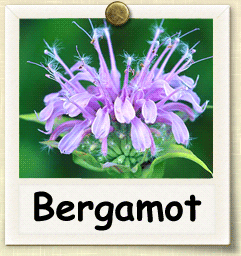
The Oswego Indians first introduced wild bergamot to American colonists during the time of the Boston Tea Party. Wild bergamot replaced the tea that was thrown into the Atlantic ocean. The fresh or dried leaves are brewed into a refreshing aromatic and medicinal tea. |
|
| |
|
|
| |
|
|
| |
|
|
|
|
|
|
|
|
|
Well-drained, moist, fertile |
|
|
|
|
|
|
|
|
|
|
|
|
Growing Guide
GROWING NOTES
Wild Bergamot is a perennial bush that can reach heights of 5 feet or more, and will show distinct, pale purple blooms that are a favorite of many types of pollinators, especially hummingbirds.
Wild Bergamot is tolerant of a wide range of soil types, but will do best with rich, loamy, fertile soil. Select a location that is partially covered by shade in the heat of the afternoon.
MAINTAINING
Wild Bergamot should be started indoors 6-8 weeks prior to final average frost of season. Seeds should be sown at a shallow depth; approximately 1/4" deep or twice the thickness of the seed. Transplant outdoors once the final frost of the spring has passed.
|
|
| |
|
| |
Heirloom seeds are the gardeners choice for seed-saving from year-to-year. Learning to save seeds is easy and fun with these books. Before you harvest, consider which varieties you might want to save seeds from so that your harvesting practice includes plants chosen for seed saving. Be sure to check out our newest seed packs, available now from Heirloom Organics. The Super Food Garden is the most nutrient dense garden you can build and everything you need is right here in one pack. The Genesis Garden s a very popular Bible Garden collection. The Three Sisters Garden was the first example of companion planting in Native American culture. See all of our brand-new seed pack offerings in our store.
|
|
| |
|
|
| |
Harvesting Guide
HARVESTING
Leaves can be harvested when dry in early-mid morning once dew has evaporated. Use a scissors or snip to clip leaves or fresh flowers.
SAVING SEEDS
|
|
| |
|
|
|
| |
|
|
|
|
|
| You can find this variety in the following Seed Packs: |
|
 |
|
| Click the packs below to see some of our other wonderful products |
|
|
|
|
|
|
|