|
Home > Guides > Herbs > Nettle |
|
How to Grow Nettle | Guide to Growing Nettle |
|
|
|
|
| |
 |
|
Overview |
|
|
|
|
|
| |
|
| |
In medieval Europe Stinging nettle was used as a diuretic (to rid the body of excess water) and to treat joint pain. Stinging nettle has been used for hundreds of years to treat painful muscles and joints, eczema, arthritis, gout, and anemia. Today, many people use it to treat urinary problems during the early stages of an enlarged prostate, for urinary tract infections, for hay fever, or in compresses or creams for treating joint pain, sprains and strains, tendonitis, and insect bites.
Growing herbs is easy and fun! Buy heirloom herb seeds here and start today! See our complete herb growing guide here. Did you know that many herbs can be sprouted or grown as micro-greens for high-nutrient super-foods? Try our sprouts packs here with the 3-Day Independence Sprouts Pack. Getting cabin fever? Can't wait to get to that Spring gardening? Grow indoors right now with the Complete Micro Greens Growing Kit or the Micro Greens Seed Pack. Have a high nutrient vegetable garden on your windowsill this week! Want to grow culinary and medicinal herbs? Click those links to buy seeds and this link to learn to grow them! It’s that simple. Have you ever thought about growing your own tea garden? How about your own home-grown, tax-free tobacco? Heirloom Organics makes gardening easy. |
|
| |
|
|
| |
Growing Guide
GROWING NOTES
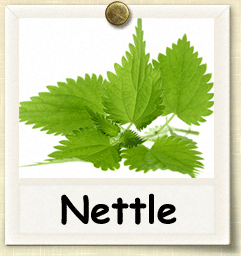
Nettle is an herbaceous, quick-growing plant whose leaves and stems are covered with tiny, hollow, silica-tipped hairs which can cause irritation. Can grow to a height of approximately 4'.
Nettles prefers rich soil with good moisture content and especially favors the edges of streams or nutrient-dense pastures.
Nettle seeds are tiny, light dependant germinators that can be started indoors or out. However, select your location carefully as nettles are very hardy and can spread quickly with the right conditions. Nettles can be assisted with stratification, but it is not necessary.
To start, tamp the small seeds lightly into the soil or cover with a thin layer of soil (1/4"). If starting indoors, sow in flats in late winter and transplant in early spring. Space plants approximately 8" apart. If direct sowing, seed in spring and thin as desired and plant rows 1" apart.
MAINTAINING
It recommended to find a permanent spot with rich, moist conditions a little away from (or on the periphery of) your other herbs.
|
|
| |
|
| |
Heirloom seeds are the gardeners choice for seed-saving from year-to-year. Learning to save seeds is easy and fun with these books. Before you harvest, consider which varieties you might want to save seeds from so that your harvesting practice includes plants chosen for seed saving. Be sure to check out our newest seed packs, available now from Heirloom Organics. The Super Food Garden is the most nutrient dense garden you can build and everything you need is right here in one pack. The Genesis Garden s a very popular Bible Garden collection. The Three Sisters Garden was the first example of companion planting in Native American culture. See all of our brand-new seed pack offerings in our store.
|
|
| |
|
|
| |
Harvesting Guide
HARVESTING
Carefully collect spiny leaves before plant flowers in spring and early summer. Do not harvest when flowering. Be sure to wear gloves when collecting to avoid the 'sting' delivered by tiny hairs on the leaves and stem. Place on well-ventilated screen to dry.
SAVING SEEDS
|
|
| |
|
| |
NOTE Do not use while pregnant or breastfeeding without consulting your doctor. Stinging nettle should never be applied to an open wound. Be careful when handling the nettle plant because touching it can cause an allergic rash. Occasional side effects include mild stomach upset, fluid retention, and hives or rash (mainly from topical use). |
|
|
|
| |
|
|
|
|
|
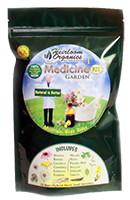
| You can find this variety in the following Seed Packs: |
|
 |
|
| Click the packs below to see some of our other wonderful products |
|
|
|
|
|
|
|